Skin care companies take your idea for a product. Turn it into something you can put on the shelf in a jar, a tube or a bottle. A good partner takes care of making the formula checking it for safety and how well it works, putting it into the packaging you want and making sure it’s all ready to go.
This way you can spend your time on building your brand and selling your product. This guide takes you step, by step through each part of the process looks at the ways of making products and helps you find a partner you can trust.
Answer: A skin care manufacturer makes your formula checks it for safety and how well it works, puts it into the packaging you choose and sends you the finished product. You give the idea for the brand. The factory gives the science, the machines and the rules they follow.
What Does the Skincare Manufacturing Journey Look Like?
Every product follows the path whether you launch a vitamin C serum or a sunscreen. This is the journey from idea to dispatch.
Step 1: Brief and Market Research
Start with your target customer, skin concern, price point and claims. A clear brief saves weeks of rework. Tell your manufacturer which texture, fragrance and ingredients you want or want to avoid. This step sets the foundation for everything that comes after.
Step 2: Formulation and Product Development
Chemists build a base formula then adjust actives, emulsifiers, preservatives and texture. Skincare formulation services range from stock formulas to fully custom recipes. Good skin care product development balances performance, safety and cost. The formula must do what it promises without causing irritation.
Step 3: Stability and Safety Testing
Your cream must stay stable on the shelf and safe on the skin. Labs run stability tests for heat, light and pH plus microbial and patch checks. Never skip skincare stability testing. It protects your customers and your reputation. A product that changes color or smells off after a weeks is not safe to use.
Step 4: Sampling and Approval
You receive sample batches. Test them for feel, scent and results. Request changes until the product matches your brief. Then approve the formula in writing. This is your chance to be sure the product feels right and delivers what it’s supposed to.
Step 5: Packaging Selection
Packaging protects the formula. Sells your brand. Options include airless pumps for actives, glass dropper bottles for serums, tubes for creams and jars for masks. Always check that the formula and container are compatible before ordering. Some ingredients degrade when exposed to light or air so packaging must protect them.
Step 6: Batch Production and Quality Control
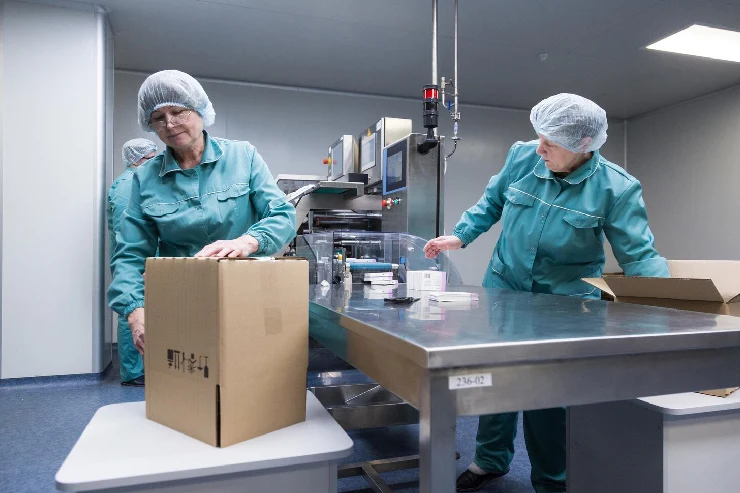
Technicians mix, fill, seal, label and code each batch. Quality teams test samples at every stage and record batch data for traceability. One bad batch can ruin your launch. That’s why quality control is not optional. It’s a must.
Step 7: Support and Dispatch
Reliable partners prepare labels, licences and documents that meet rules, from the Central Drugs Standard Control Organisation (CDSCO) and export requirements. Then they. Ship your order. Every detail matters. If the label is wrong the product might not be allowed to enter the market. If the documentation is incomplete your shipment could be delayed.
Get QuoteManufacturing Models: Which One Fits Your Brand?
Different models suit different budgets and goals. Compare them before you sign anything.
| Model | Who Owns the Formula? | Best For | Speed |
|---|---|---|---|
| Private label | Manufacturer (you own the brand) | Fast, low-risk launches | Fastest |
| White label | Manufacturer (shared with others) | Testing demand cheaply | Very fast |
| Contract manufacturing | You | Unique, branded formulas | Moderate |
| Third-party manufacturing | Depends on contract | Outsourcing all production | Moderate |
Private Label Skincare
With label skincare you pick a proven formula put your name on it and launch. Private label skincare is ideal for startups that want to move and spend little money. A trusted private label skin care manufacturer can also tailor the scent, color and packaging to fit your brand.
White Label Skin Care Products
White label skin care products are ready‑made. Many brands can sell the base formula under different names. White label skin care products are good for testing the market. They do not allow much differentiation.
Skin Care Contract Manufacturing
Skin care contract manufacturing means the factory makes your exclusive formula exactly as you specify. You control the recipe, the ingredients and the claims. Established brands pick skin care contract manufacturing for uniqueness and long‑term protection.
Working With Third‑Party Skin Care Manufacturers
These third‑party skin care manufacturers handle production, for brands that do not have their plant. They manage sourcing, filling and quality checks. Always clarify formula ownership in writing because contracts differ widely.
How to Choose Skin Care Manufacturers: A Practical Checklist
Use this list when you evaluate suppliers:
- Certifications: Look for ISO and GMP compliance, aligned with ISO 22716 for cosmetics.
- Formula ownership: Confirm who owns the recipe before development starts.
- Testing: Ask for stability, microbial, and safety reports.
- Transparency: Visit the plant or request a virtual audit.
- Flexible MOQ: Check whether the minimum order quantity suits your cash flow.
- Packaging help: Ask if the team sources and fills complex containers.
- Track record: Request references from brands of similar size.
Be careful with prices far below market average. Heavy dilution or weak actives usually explain the gap. Third-party skin care manufacturers that refuse an audit deserve extra scrutiny.
Cost, MOQ, and Timeline: What to Expect
Costs depend on actives, packaging and volume. Minimum order quantities for creams and serums often start between 500 and 1,000 units per SKU though some factories go lower for startups. Plan 45 to 60 days, for a batch including sampling and testing. Rushing this schedule is the common startup mistake. White label skin care products usually carry the MOQs while custom formulas need higher volumes. Ask every label skin care manufacturer for a written quote that lists formulation, packaging, testing and filling costs separately so you can compare offers fairly.
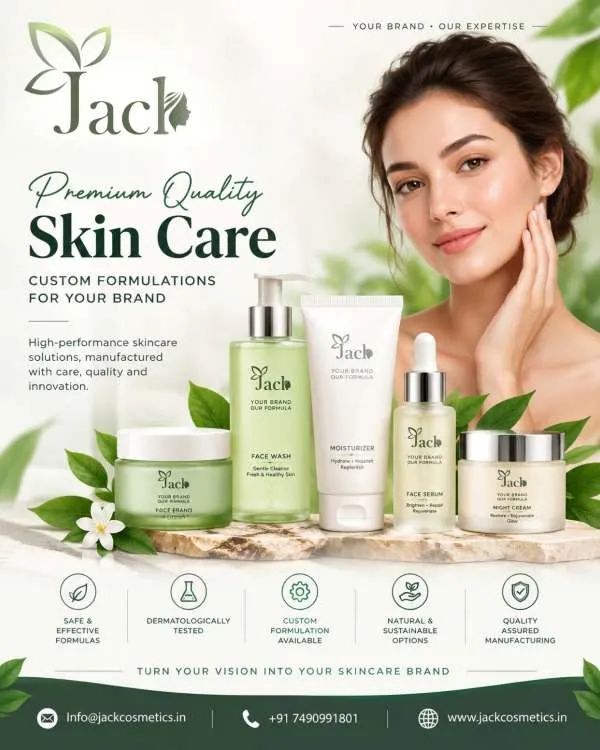
Why Choose Jack Cosmetic ?
Founded in 2018 Jack Cosmetic Pvt. Ltd. Is a trusted label skin care manufacturer in Gujarat. Jack Cosmetic Pvt. Ltd. Has a team with deep formulation expertise and has delivered custom cosmetic manufacturing solutions to more than 200 brands, with 98 percent client satisfaction and high repeat business.
What sets us apart:
- State‑of‑the‑art manufacturing facility
- Custom formulation and low minimum order quantity
- Scalable production from startup to bulk orders
- quality control at every stage
- On‑time delivery and pan‑India supply
- Full regulatory support
Certifications and affiliations:
ISO Certified, GMP Certified, FDA approved (wherever applicable) AYUSH (, for Ayurvedic products) Cruelty‑Free Eco‑Friendly and Make in India.
Our address: Survey no.324 paiki Plot no. 10/A, Near Paradise Industrial Park, Village – Chachrawadi Vasna, Sarkhej Bavla Road, Ta. Sanand, Dist. Ahmedabad, Gujarat – 382213, India.
Contact: +91 74909 91801 | Info@jackcosmetics.in | Visit Jack Cosmetics
Frequently Asked Questions
Q.What do skincare manufacturers do?
- They develop formulas, test products, source packaging, produce batches, and support compliance. Brands then sell the finished products under their own name.
Q.What is the difference between private label and skin care contract manufacturing?
- Private label skincare uses an existing formula with your branding. Contract manufacturing produces your own exclusive formula. Private label is faster and cheaper, while contract manufacturing gives you full control.
Q.How long does skincare manufacturing take?
- Most first batches take 45 to 60 days. That covers formulation, sampling, stability testing, packaging, and production.
Q.What is the minimum order quantity for skincare products?
- Many factories set a minimum of 500 to 1,000 units per product. Low-MOQ manufacturers like Jack Cosmetic Pvt. Ltd. help startups begin with smaller runs.
Q.Can third-party skin care manufacturers help me export?
- Yes, if they follow global GMP standards and provide COAs, MSDS, and labelling support. Always verify certifications first.
Q.Who owns the formula in skincare manufacturing?
- Ownership depends on your contract. Private label formulas usually belong to the manufacturer. Custom formulas can belong to you if the agreement says so.
Conclusion
Strong brands start with the right manufacturing partner. Understand each stage, compare the models, and verify certifications before you commit. Jack Cosmetic Pvt. Ltd. combines custom formulation, low MOQ, and strict quality control to take your idea from formulation to packaging. Call +91 74909 91801 or email Info@jackcosmetics.in to start your skincare line today.
Get Quote